
There are few feelings more sinking for a gardener than waking up to a glittering, white lawn in mid-October or late April. The crisp air signals one thing: the first killing frost has arrived. For those who have spent months nurturing seedlings, pruning shrubs, and tending to vegetable patches, a sudden drop in temperature can mean the difference between a bountiful harvest and a premature compost pile.
However, the end of the growing season doesn’t have to be dictated by the first dip on the thermometer. With the right tools and knowledge, you can extend your season, protect vulnerable perennials, and keep your winter vegetables cozy even when the air turns biting cold. The most effective tool in this arsenal? High-quality plant covers for freeze protection.
In this comprehensive guide, we will explore the science of frost protection, how to choose the right fabric weight, and how to install these covers effectively. We will also dive deep into the best products currently on the market, including top-rated options from Valibe, SnugNiture, YFFSIDMY, and MuyuRise.
![[artistly design] 019be260 dbe0 7022 a415 8290fa2ddf1a](https://cozylivingguide.com/wp-content/uploads/Artistly-Design-019be260-dbe0-7022-a415-8290fa2ddf1a-1024x427.png "Best Plant Covers for Freeze Protection: The Ultimate Guide to Saving Your Garden")
Understanding the Enemy: Frost vs. Freeze
Before we look at the solutions, it is vital to understand what we are fighting. While the terms are often used interchangeably, “frost” and “freeze” refer to different atmospheric conditions, and they affect plants in unique ways.
Radiation Frost
This typically occurs on clear, calm nights when heat radiates from the Earth’s surface back into the atmosphere. As the ground cools, the air adjacent to it cools as well. If the temperature drops below 32°F (0°C), water vapor condenses as ice crystals on surfaces—leaves, cars, and roofs. This is a surface event. A simple floating row cover works wonders here by trapping the ground’s heat.
Advective Freeze
This is a more severe event caused by a cold air mass moving into an area (a cold front), usually accompanied by wind. During a freeze, the air temperature itself drops well below freezing. This causes the water inside the plant’s cells to freeze and expand, rupturing the cell walls. Once the sun comes out and the plant thaws, the damaged leaves turn black and mushy. This requires heavier protection, often multiple layers of plant covers, to ensure survival.
Why Not Use Plastic or Old Sheets?
Many new gardeners make the mistake of grabbing whatever is handy—plastic tarps or old cotton bedsheets—to cover their tomatoes or citrus trees. While better than nothing, these materials have significant flaws.
The Problem with Plastic: Plastic is not breathable. If you wrap a plant in plastic, you trap moisture. When the temperature drops, that moisture freezes against the plant tissue, causing cold burns. Furthermore, if you forget to remove the plastic when the sun comes up, the greenhouse effect can cook your plants in a matter of hours.
The Problem with Cotton Sheets: Cotton absorbs water. If it rains or snows, the sheet becomes heavy and wet. A wet sheet touching a plant during a freeze conducts cold directly to the leaves, effectively eliminating any insulating value.
The Solution: Non-Woven Polypropylene Fabric: The products we are reviewing today (Valibe, SnugNiture, YFFSIDMY) are made from spun-bonded polypropylene. This material is designed specifically for agriculture. It is:
- Breathable: Allows air and moisture to pass through.
- Lightweight: Floats over plants without crushing them.
- Insulating: Traps heat radiating from the soil.
- Quick-Drying: Does not hold water like cotton.
Top Plant Covers for Freeze Protection: Product Analysis
We have analyzed five of the most popular and effective plant covers available on Amazon. Whether you have a small raised bed or an orchard of fruit trees, there is a solution here for you.
1. Valibe Plant Covers Freeze Protection
The Valibe plant cover is a staple for many home gardeners. It is designed as a floating row cover, meant to be draped directly over crops or supported by hoops.

- ※Big Size to cover large area : The size of our plant cover is 10x30ft, the size can cover large areas. You can cut the …
- ※Lightweight and Breathable MATERIAL Good for protecting Plant: the plant frost cover material is 0.9 oz/sq² non-woven p…
- ※Wide Application In your Garden Work. The plant row cover not only can work as a barrier against frost , but also can b…
Key Features and Performance:
The Valibe cover is renowned for its balance between durability and light transmission. When covering plants, you generally want to block the cold but not the light, especially if you plan to leave the cover on for several days during a cold snap. This fabric allows sunlight to penetrate, ensuring photosynthesis continues even while the plant is bundled up.
It excels in versatility. You can cut it to size with standard household scissors without the fabric fraying, making it perfect for custom-shaped garden beds. It provides frost protection usually down to about 26°F-28°F (depending on the specific weight chosen), making it ideal for extending the harvest of cool-weather crops like kale, spinach, and broccoli well into December.
Best Use Case:
Use the Valibe cover for raised vegetable beds. Pair it with PVC or metal hoops to create a low tunnel. This creates a pocket of warm air around your vegetables, acting like a mini-greenhouse.
2. SnugNiture Plant Covers Freeze Protection
When the forecast predicts a hard freeze, you need a cover that offers substantial protection. SnugNiture provides a robust option for gardeners dealing with harsher climates.
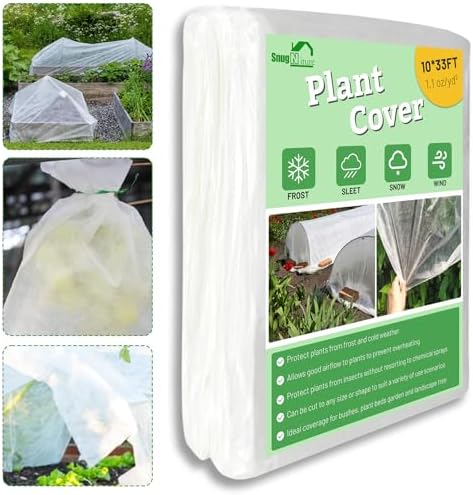
- 【Premium Materials & Diverse Sizes】Our plant covers are available in two sizes, 10x33ft and 10x50ft. Made from 1.1 ounce…
- 【Air Permeability and Light Transmittance】The cover allows rain and sunshine to reach the plants and soil. It’s not only…
- 【More Effective Protection】Our plant covers provide reliable safeguard for your plants. They can effectively prevent dam…
Key Features and Performance:
The “Snug” in SnugNiture refers to the protection capability. This blanket is designed to act as a barrier against frost, wind, snow, and even pests during the warmer months. One of the standout features of this brand is the material quality. It resists tearing, which is a common complaint with cheaper, paper-thin row covers.
Durability is key here. If you live in an area with high winds accompanying your cold fronts, flimsy fabric will shred. SnugNiture covers are built to withstand mechanical stress. They can be weighed down with rocks, staples, or sandbags without ripping at the stress points.
Best Use Case:
This is an excellent choice for covering ornamental shrubs or sensitive potted plants on a patio. Because of its durability, it can be wrapped around vertical plants and secured with twine (the “mummy wrap” method) to protect flower buds on hydrangeas or camellias from late spring frosts.
3. YFFSIDMY Plant Covers (6.5 x 16 ft)
YFFSIDMY offers a range of sizes, but the 6.5 x 16 ft option is practically tailor-made for the standard suburban garden row.

- THICKER MATERIAL: Our plant freeze protection cover is made of UV stabilized polypropylene. Upgraded thicker 0.9oz./sq.y…
- 6.5FTx16FT PLANT COVER: The frost covers for outdoor plants measures 6.5FTx16FT, and this plant covers for winter covers…
- WINTER PROTECTION: Frost blankets for outdoor plants protect your plants and crops from harsh weather such as low tem, c…
Key Features and Performance:
The dimensions of this cover are its biggest selling point. Most standard raised beds are 4 feet or 8 feet long. A 16-foot length allows you to cover a long row or cut it in half to cover two 8-foot beds comfortably. The 6.5-foot width provides ample slack to go over tall plants like peppers or bushy perennials and still reach the ground to be secured.
This fabric is breathable and permeable. You can water your plants directly through the cover. This is a massive time-saver, as removing and replacing covers every time you need to water can be tedious and risks damaging the plants. The material allows rain to soak through gently while breaking the impact of heavy downpours that might wash away soil.
Best Use Case:
Perfect for the “square foot gardener.” If you have a 4×8 raised bed, this cover gives you plenty of room to use hoops that are 2-3 feet high, allowing you to grow taller crops like Swiss chard or Brussels sprouts under protection.
4. YFFSIDMY Plant Covers (10 x 20 ft)
Sometimes, you just need a massive blanket. The 10 x 20 ft version of the YFFSIDMY cover is designed for large-scale coverage.
- THICKER MATERIAL: Our plant freeze protection cover is made of UV stabilized polypropylene. Upgraded thicker 0.9oz./sq.y…
- 10FTx20FT FROST CLOTH:The frost covers for outdoor plants measures 10FTx20FT Large Size, and this plant covers for winte…
- WINTER PROTECTION: Frost blankets for outdoor plants protect your plants and crops from harsh weather such as low tem, c…
Key Features and Performance:
Covering large fruit trees or expansive berry patches with small strips of fabric is a nightmare. You end up with gaps where cold air sneaks in. This 10×20 ft sheet solves that problem. It is large enough to drape over small-to-medium citrus trees, Japanese maples, or a large cluster of blueberry bushes.
Despite its size, it remains lightweight. You don’t want a heavy cover that snaps the branches of your lemon tree. This fabric provides the thermal insulation needed without the crushing weight. It effectively traps heat rising from the earth, keeping the ambient temperature around the tree significantly higher than the outside air.
Best Use Case:
Orchards and landscaping. Use this to drape over your prized citrus trees or extensive flower beds. It is also excellent for covering a large patch of strawberry plants to keep the crowns from freezing during the deep winter.
5. MuyuRise Plant Covers Freeze Protection
Rounding out our list is the MuyuRise plant cover. This brand focuses on providing reliable protection for a variety of garden setups.

- 【Plant Covers Freeze Protection Kit】The frost blankets for outdoor plants fabric kit includes a thickened 1.8oz/yd² -10f…
- 【1.8oz/yd²Thickened Non-Woven Materials】Constructed from thickened 1.8 oz/yd² non-woven fabric, this frost cloths for ou…
- 【Easy to Install & Reuse】Simply drape the plant freeze protection cover directly over plants or support it with hoops. T…
Key Features and Performance:
MuyuRise covers are often praised for their reusability. In the world of garden fabrics, there are “single-season” covers that disintegrate under UV light, and there are multi-season covers. MuyuRise generally falls into the category of covers you can fold up, store in the garage, and bring out again next year.
This cover offers excellent thermal retention. It creates a stable microclimate. By preventing rapid temperature fluctuations (which are often more damaging than the cold itself), it helps plants acclimatize to winter conditions. It also serves a dual purpose as an insect barrier in the spring and fall, keeping cabbage moths and aphids off your crops.
Best Use Case:
General purpose garden protection. Whether you are covering a row of lettuce or wrapping a potted fern, the MuyuRise offers a dependable barrier against the elements.
How to Choose the Right Weight (Thickness)
Plant covers are not “one size fits all” regarding thickness. They are measured in weight per square yard (oz/sq yd). While the specific listings above may vary in weight, here is a general guide to what you should look for based on your climate:
- Lightweight (0.5 oz): primarily for insect control. Provides very little frost protection (maybe 2°F). Allows 85-90% light transmission.
- Medium Weight (0.9 – 1.0 oz): The standard “frost blanket.” Protects down to 28°F. Good for spring/fall extension. Allows 70% light transmission.
- Heavy Weight (1.5 – 2.0 oz): Serious freeze protection. Can protect plants down to 24°F or lower. However, these block significantly more light (only 30-50% transmission). These should generally be removed during the day if temperatures rise above freezing to allow the plant to get sunlight.
Installation Techniques: Maximizing Protection
Buying the cover is only half the battle. How you install it determines whether your plants survive.
1. The Floating Row Cover Method
This is the simplest method. You simply drape the fabric loosely over the plants.
- Crucial Tip: Leave slack! If the cover is tight, the leaves touching the fabric will freeze. The cover needs to float above the foliage.
- Securing: Use garden staples, heavy rocks, or bricks to seal the edges completely against the soil. The goal is to trap ground heat. If wind can get under the edges, the cover is useless.
2. The Low Tunnel (Hoop) Method
This is the most effective method for vegetables.
- Setup: Use PVC pipes, metal wire, or bamboo to create arches over your garden bed.
- Application: Drape the Valibe or YFFSIDMY cover over the hoops.
- Benefit: The fabric never touches the plants. This prevents cold transfer and allows for air circulation, reducing the risk of fungal diseases. It also handles snow load better, as the hoops support the weight rather than the plant stems.
3. The “Lollipop” or Mummy Wrap (For Trees)
For vertical plants like citrus or ornamental shrubs protected by the SnugNiture or large YFFSIDMY covers:
- Step 1: If possible, drive a stake into the ground next to the tree that is slightly taller than the tree. This takes the weight of the cover off the branches.
- Step 2: Drape the cover over the tree/stake.
- Step 3: Wrap the cover all the way to the ground.
- Step 4: Important: Secure the bottom to the ground with rocks, not to the trunk. You want to trap the heat rising from the soil around the tree. Tying it to the trunk cuts off the heat source.
Advanced Strategies for Extreme Cold
If you are facing a “once in a decade” freeze, a single layer of fabric might not be enough. Here is how to supercharge your protection:
1. Double Layering:
Air is an excellent insulator. By placing two layers of covers (like the Valibe over the MuyuRise), you create an air gap between the layers. This significantly boosts the thermal rating. A light sheet over a hoop house, followed by a heavier blanket on top, can protect plants in very low temperatures.
2. The Water Jug Trick:
Water holds heat much better than air. Paint several milk jugs black and fill them with water. Place them inside your covered row or at the base of your tree. During the day, the black jugs absorb solar heat. At night, they slowly release that heat under the cover, raising the temperature by several degrees.
3. Christmas Lights:
For high-value trees, wrap the trunk and branches with non-LED (old school incandescent) outdoor Christmas lights before covering. The gentle heat emitted by the bulbs can keep the internal temperature of the covered tree well above freezing. Note: Do not let hot bulbs touch the fabric directly if it is not heat-rated, though most prop materials are safe with low-heat lights.
4. Water Before the Freeze:
Moist soil holds more heat than dry soil. Water your garden thoroughly during the day before a freeze is expected. As the water in the soil cools, it releases latent heat, which rises and is trapped by your plant covers.
Care and Storage of Your Plant Covers
To get the most value out of your purchase, treat your covers well.
- Drying: Never fold and store a wet cover. It will grow mold and rot. Drape it over a fence or clothesline to dry completely after the freeze danger has passed.
- Cleaning: If they get muddy, rinse them with a hose. Do not put them in a washing machine or dryer, as the agitation can tear the spun fibers.
- Storage: Store in a cool, dark place. UV light degrades polypropylene over time. Keeping them out of the sun when not in use will double their lifespan.
- Repair: Small tears from branches or garden staples can be repaired with duct tape or even sewn with a simple stitch.
Common Mistakes to Avoid
- Covering Too Late: Do not wait until the sun goes down to cover your plants. You want to trap the heat the soil absorbed during the day. Cover your plants in the late afternoon while the sun is still hitting the ground.
- Leaving Heavy Covers on Too Long: If you are using a heavyweight cover and the weather warms up, take it off. Plants need sunlight and airflow. Leaving a heavy cover on during a 60°F sunny day can overheat the plants.
- Gaps at the Bottom: We cannot stress this enough—if the wind can get in, the heat gets out. Seal the perimeter of your covers with soil, rocks, or landscape staples.
Conclusion
Gardening is a labor of love, and there is no reason to let winter dictate when that love ends. By investing in high-quality plant protection like the Valibe, SnugNiture, YFFSIDMY, or MuyuRise covers, you are buying insurance for your garden.
Whether you are trying to squeeze a few more salads out of your lettuce patch, protecting a valuable lemon tree, or shielding your landscaping from a freak snowstorm, these covers provide the thermal barrier your plants need to survive and thrive.
Assess your specific needs—measure your beds, check your typical winter low temperatures, and decide between floating covers or heavy blankets. With the right preparation and the right gear, your garden can be a year-round source of joy, regardless of the frost outside.