
In the modern world of micro-apartments, van life adventures, and bustling dorm rooms, the traditional laundry routine is evolving. For years, people living in compact spaces had two choices: haul heavy bags to a laundromat or spend hours scrubbing clothes in a bathroom sink. However, a new appliance category has emerged to bridge the gap between convenience and space constraints: the portable, foldable washing machine.
These compact marvels are not designed to replace a full-sized Samsung or LG unit. Instead, they are specialized tools designed for specific tasks: washing intimates, cleaning baby clothes, handling gym gear, or serving as the primary washer for campers and travelers. They offer the hygiene of a private wash without the footprint of a permanent appliance.
In this comprehensive guide, we will explore four of the top contenders in the foldable washer market. We will dissect their features, capacities (ranging from 15L to 16L), and practical applications to help you decide which unit belongs in your home or RV.
![[artistly design] 019be253 3614 71bc 9699 dc0801f5d66b](https://cozylivingguide.com/wp-content/uploads/Artistly-Design-019be253-3614-71bc-9699-dc0801f5d66b-1024x427.png "The Revolution of Clean: Why Portable Foldable Washing Machines Are Taking Over Small Spaces")
The Rise of the Mini Washer: Who Needs One?
Before diving into the specific product reviews, it is essential to understand who benefits most from these devices.
- Apartment Dwellers: If you live in a studio without laundry hookups, these machines are lifesavers for “in-between” loads. You can wash socks and underwear daily, reducing the frequency of trips to the laundromat.
- Parents of Infants: Baby skin is incredibly sensitive. Many parents prefer to wash baby clothes separately from the household load, using hypoallergenic detergents. A mini washer is perfect for burp cloths, onesies, and bibs.
- The Hygiene Conscious: There is a growing trend of washing “intimates” (underwear and socks) separately from outerwear to prevent cross-contamination. These small machines are ideal for creating a dedicated “sanitary cycle” for your most personal items.
- Travelers and Campers: Whether you are in an RV, a camper van, or a hotel room, a foldable washer fits in a suitcase or storage bin, allowing you to wash clothes on the go without relying on expensive campsite facilities.
Top Picks for Foldable Washing Machines
We have selected four high-performing models that balance capacity, portability, and cleaning power. While they share a similar form factor, nuanced differences make each suited for different users.
1. The 15L Foldable All-Rounder
This unit represents the standard for modern portable washers. With a 15-liter capacity, it hits the sweet spot between compactness and utility. It features a collapsible design that allows it to shrink down to a fraction of its height, making it easy to slide under a bed or tuck into a cabinet.
The control panel usually offers three timing modes, allowing you to customize the wash based on the soil level of the clothes. It utilizes a positive and negative pulsator—essentially mimicking the motion of hand washing but with greater consistency and speed. This agitation is strong enough to remove stains but gentle enough to protect delicate fabrics like silk or lace.
Most importantly, this model includes a drain basket. While often mistaken for a dryer, the basket is used during the spin cycle to extract excess water, ensuring your clothes don’t drip everywhere when you hang them to dry.

- 【Multiple Cleaning Modes】This mini washing machine offers 3 different cleaning modes, with 3-minute, 5-minute and 10-min…
- 【Portable Washing Machine】Portable washer with spin basket and Foldable Design, The body weighs only 3.5 lbs, compact an…
- 【Food Grade Material】The laundry machine is made of TPE and food-grade silicone material to protect your health and that…
2. The “Upgraded” Cleaning Powerhouse
Next on our list is a model that touts “upgraded” internal components. While many mini washers look identical on the outside, the motor quality inside can vary. This 15L model focuses on providing a more robust motor that delivers higher torque. This is particularly important if you plan on washing slightly heavier items, like thick cotton towels or gym leggings, which become heavy when wet.
This unit also emphasizes stability. A common complaint with lightweight washers is that they can vibrate across the counter during the spin cycle. This upgraded version typically incorporates improved suction cups or a weighted base design to keep the machine anchored during operation. It retains the signature foldable silicone body, ensuring that despite its stronger motor, it remains just as portable as its competitors.

- 【Portable Washing Machine】Portable washer with spin basket and Foldable Design, The body weighs only 3.6 lbs, compact an…
- 【Multiple Cleaning Modes】This mini washing machine offers 3 different cleaning modes, with 3-minute, 5-minute and 10-min…
- 【Folding Design】This small portable laundry machine cleverly adopts a foldable design, which measures 12x12x13 inches wh…
3. The Large Capacity Intimates Specialist
Marketed specifically for apartments and camping, this 15L model positions itself as the ultimate solution for underwear and delicate garments. The design focus here is on the “Blue Light” feature. While blue light in these appliances is not a medical-grade sterilizer, it acts as an auxiliary hygiene measure, often cited by manufacturers to help inhibit bacterial growth during the wash cycle—a feature highly sought after for washing underwear.
The interface is designed for simplicity, usually featuring one-touch operation. This machine is particularly popular among dorm students who need a quick, no-fuss way to wash gym socks and shirts without waiting for a shared laundry machine to become available. Its motor is tuned for quiet operation, ensuring you won’t disturb roommates or neighbors.
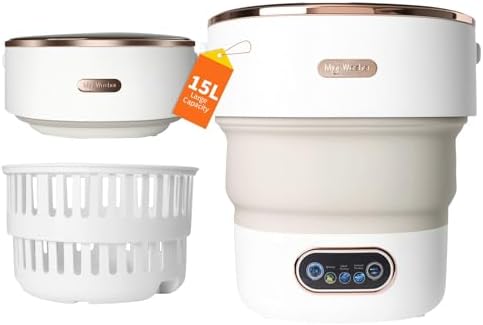
- Powerful Cleaning Performance: This portable washing machine delivers a deep, thorough clean with its advanced imitation…
- Ultra-Portable & Compact Design: Weighing just 4lbs, this mini washer is lightweight and easy to carry, making it ideal …
- Simple & User-Friendly Operation: With its semi-automatic cleaning function, this portable washing machine is incredibly…
4. YMXA 16L Mini Laundry Machine
The YMXA model distinguishes itself with a slightly larger capacity: 16 Liters. While a 1-liter difference may seem negligible, in the world of mini-washers, this can be the difference between fitting in an extra t-shirt or towel.
This unit is built for the “heavy user” of the portable world—someone who might use the machine daily rather than weekly. It features a reinforced folding structure. Since the silicone sidewalls are the most stressed part of these machines (being folded and unfolded repeatedly), the reinforced design aims to extend the lifespan of the appliance. It includes the standard washing and spinning timer functions and comes with a detachable drain basket.

- 【Exclusive Cleaning for Every Garment】Enjoy a private laundry space with this portable washing machine. The portable min…
- 【16L Large Capacity, Compact Design】Don’t be fooled by its size — this portable washer features a generous 16L capacity …
- 【Energy & Water Saving Operation】Designed as an efficient portable washer machine, this small washing machine portable m…
Deep Dive: How Do Foldable Washers Work?
To get the most out of these products, it helps to understand the technology behind them. Unlike standard washing machines that use a large agitator or a tumbling drum, these portable units use a bottom-mounted pulsator.
The Pulsator Mechanism:
The pulsator spins back and forth, creating a water vortex. This vortex pushes water through the fabric fibers, dislodging dirt and sweat. Because there is no central post (agitator), clothes have more room to move, which reduces tangling and wear-and-tear.
The Foldable Design:
The body of the machine is made from TPE (Thermoplastic Elastomer) or high-grade silicone. This material is durable, heat-resistant, and flexible. When you are done washing, you simply press down on the top frame, and the silicone walls accordion down, reducing the height from roughly 12 inches to about 4 inches.
The “Spin” Cycle:
It is crucial to manage expectations regarding the spin cycle. These machines do not spin at the 1200 RPMs of a full-sized washer. They use a small plastic basket that snaps onto the pulsator. You place your wet clothes inside this basket, and the machine spins to use centrifugal force to push water out. It leaves clothes damp—not dripping—ready for line drying.
What Can You Actually Wash? (Realistic Capacity Guide)
One of the biggest mistakes buyers make is overestimating capacity. These are not for jeans, bedsheets, or heavy jackets. Overloading the machine will strain the motor and prevent the pulsator from spinning.
Ideal Load for a 15L/16L Washer:
- Underwear: 4-6 pairs
- Socks: 6-8 pairs
- T-Shirts: 2-3 standard cotton shirts
- Baby Clothes: 1 full outfit set + bibs
- Towels: 1-2 hand towels or face cloths (avoid large bath towels)
If you attempt to wash a pair of heavy denim jeans, the weight of the wet denim will likely stop the pulsator from moving, and the cleaning result will be poor. Stick to lightweight fabrics for the best results.
Step-by-Step User Guide
Using these machines is intuitive, but following a process ensures cleaner clothes and a longer lifespan for the device.
Step 1: Expansion and Setup
Place the machine on a flat, stable surface near a sink or bathtub (for drainage). Pull up on the handle to expand the silicone container fully.
Step 2: Filling
Add your clothes. Do not pack them tight; they need room to swim. Add water. Most of these units are manual fill, meaning you use a bucket or a shower head to fill the tub.
- Pro Tip: Use warm water (not boiling) to help dissolve detergent and break down body oils.
Step 3: Detergent
Use liquid detergent rather than powder. Powder may not dissolve fully in the gentle cycle of a mini washer. You only need a tiny amount—about a teaspoon.
Step 4: The Wash Cycle
Long press the power button to turn it on. Select your wash time (usually 5 or 10 minutes). The machine will agitate, pause, and reverse.
Step 5: Draining
Once the cycle ends, unhook the drain pipe (usually located at the bottom rear) and let the dirty water flow into the sink or shower drain.
Step 6: Rinsing
Refill with clean water and run a short cycle (2-3 minutes) to rinse out the soap. Drain again.
Step 7: Spinning
Snap the drain basket onto the center rotor. Place wet items inside the basket. Select the spin/drain mode. This extracts the bulk of the water.
Step 8: Drying and Storage
Hang your clothes to dry. Wipe out the inside of the machine with a dry cloth, fold it down, and store it away.
The Environmental and Economic Benefits
Beyond convenience, there is an argument for sustainability.
Water Conservation:
A full-sized washing machine uses between 15 to 30 gallons of water per load. If you only have two dirty shirts and three pairs of socks, running a full cycle is incredibly wasteful. A portable washer uses a fraction of that water, making it an eco-friendly choice for small loads.
Electricity Savings:
These units run on very low wattage compared to major appliances. If you live in an RV running off solar or a battery bank, or if you are simply conscious of your electric bill, the low power draw is a significant advantage.
Longevity of Clothes:
Machine washing is rough on fabrics. The tumbling, twisting, and friction wear down fibers over time. The gentle pulsator action of a portable washer is much kinder to fabrics, helping your favorite delicates and yoga pants last longer.
Frequently Asked Questions (FAQ)
Q: Do these machines dry the clothes completely?
A: No. No portable washer in this class uses heat. They have a spin basket that removes excess water so the clothes don’t drip, but you will still need to hang-dry the items.
Q: Can I use bleach?
A: Yes, but be careful. The silicone material is durable, but harsh chemicals used repeatedly could degrade it over time. Dilute bleach before adding it, or stick to color-safe bleach alternatives.
Q: How loud are they?
A: Very quiet. They are generally quieter than a dishwasher. You can easily watch TV or have a conversation in the same room while it is running.
Q: Can it wash shoes?
A: It is not recommended. Shoes are heavy and rigid; they can damage the silicone walls or the plastic pulsator. Stick to soft fabrics.
Q: Do I need a plumbing hookup?
A: No. These are “bucket” style washers. You fill them manually and drain them manually via a tube. No installation is required.
Conclusion: Which Model Should You Choose?
Choosing between these four models comes down to your specific needs.
If you are looking for a reliable, standard option that balances price and performance, the 15L Foldable Washing Machine is a fantastic entry point. It does exactly what it promises and stores away easily.
For those who want a bit more assurance regarding motor strength and stability, particularly for RV use where surfaces might not be perfectly level, the Upgraded Portable Washing Machine is the smarter investment.
If hygiene is your top priority—perhaps for baby clothes or sensitive skin—the Large Capacity Portable Washer with its focus on separation and cleanliness is the ideal candidate.
Finally, for the volume-conscious buyer who wants to maximize every load, the YMXA Mini Laundry Machine 16L offers that extra liter of capacity and a robust build quality.
Whichever you choose, integrating a portable foldable washer into your life brings a level of freedom and cleanliness that transforms small-space living. Say goodbye to the pile of dirty socks in the corner and hello to fresh laundry, on your schedule.